
To date, no substantial study has been written about this day and its name. Historians and Orientalists have not produced or undertaken a sufficiently scientific treatment of it. Various writings and references to the occasion have appeared here and there, but they are generally more nationalist and mythological than logical.
Many people trace this day and its ritual to archaeological matters and associate it with a range of subjects. In Zoroastrian belief, God completed the creation of the earth over 365 days, ceased work and rested on the first day of Newroz and Khakelêwe, and brought creation to completion. On the first day of Khakelêwe, the “fravahar” returns to earth. The return of the /fravahar/ is narrated distinctively as a myth in the oral literature of Mazdaism. The /fravahar/, or /fravashi/, is one of the sacred human forces that accompanies a person before creation and remains innocently with that person until 13 days after death.
Zoroastrians also believed that the earth would endure for 13,000 years. This interpretation was adopted under the influence of neighboring Mesopotamian peoples. In their belief, each of the twelve zodiacal constellations governs the world for one thousand years; together, the twelve signs rule the earth for 12,000 years, after which the earth comes to an end. This belief was more characteristically Babylonian and influenced them.
- Another view holds that during the reign of the Achaemenid Xerxes, a major massacre of Iranians occurred on the thirteenth day of Khakelêwe, after which Iranians regarded the number and the day as inauspicious and impure.
- Christianity played an active role in spreading the idea that this number was inauspicious. Jesus had twelve close disciples; when their number, including Jesus, became thirteen, Jesus encountered suffering and was crucified.
- Others trace the day to Babylonian and Sumerian customs and rituals. The Sumerian New Year, called /Zagmuk/, and the Babylonian /Akitu/ lasted twelve days. After those twelve days, people remained outdoors in the heart of nature and the environment. This ritual has a history of approximately 5,500 years.
Many accounts have been written about why the day was named /Sizdah Bedar/, although most may be neither scientific nor logical. What is clear is that /Sizdah Bedar/ is a compound of the numeral /sêzde, sênezde, seynze/ and the word /bedar/, meaning to go out of the house: /bedar, weder/ + /ketin/. It also conveys the removal of the number thirteen.
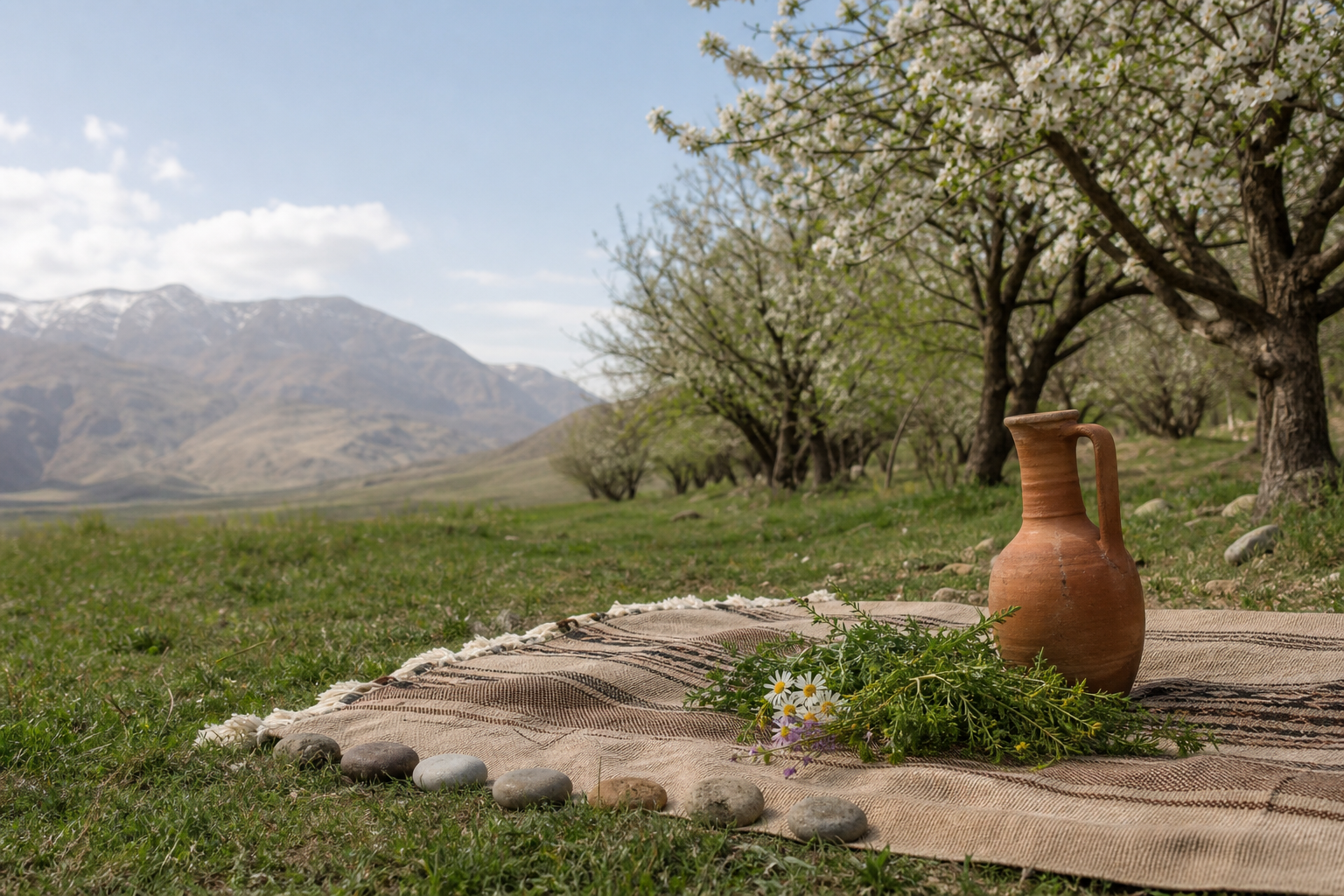
According to this ritual, twelve days of happiness and good fortune are spent at home. On the thirteenth day, people go outdoors for an excursion in nature, or they empty and clean the house, seeking to take out and remove grief, misfortune, difficulty, impurity, and disharmony from themselves and their homes.
The word /thirteen/ entered many peoples and cultures extensively through Christianity.
Numerous discussions describe thirteen as an inauspicious, improper, and impure number. Thus the thirteenth day, which follows the twelfth, is treated as a day to be cast out, and the thirteen is expelled on that evening. In countries shaped by Christianity, Sunday is a day of rest and withdrawal from worldly work: people are expected to rest, devote time to God, pray, bow, and repent. This conflicts with the outlook of Islamists, who regard themselves and their God as superior and acceptable, and on that basis have plundered and occupied other beliefs and cultures. Yet the Islamist attempt to distort the word /thirteen/ and characterize it as impure and inauspicious carries no logical force. In the Aramaic alphabet there is a numerical alphabet known as /abjad/, in which every letter has its own numerical code. The Christian Sunday, according to the Aramaic abjad, becomes (أ: 1), (ح: 8), and (د: 4), forming (أحد). What is the connection? The sum of (1, 8, 4) is (13), while the word for Sunday in the Aramaic abjad is (أحد); (أحد) is also one of the Islamic names of Allah. Following the Crusades and the ascendancy of Islamic powers, this idea penetrated Christian culture and custom extensively. For Islamists, this day and occasion stand against Allah and their religion, and only Friday should be a day devoted to God, because in their scripture only that day is sacred.
Sabir Zhakaw
زارگە · گفتوگۆ
لێدوانەکان٠
٠ لێدوان · ٠ وەڵام
دەسەڵاتەکانی لێدوانەکانت پشکنراون…
هێشتا لێدوان نییە — یەکەم کەس بە کە بۆچوونەکەت بنووسیت.