A word that has become especially prominent and frequently heard in recent days because of the particular phenomenon of COVID-19. As always, the baseless and aimless Rudaw media network has inserted itself into the subject and introduced the unscientific and illogical word varêz, confusing many people. Following Rudaw’s action, several words have been coined or revived as equivalents of quarantine. Let us first examine when and how this word was formed.
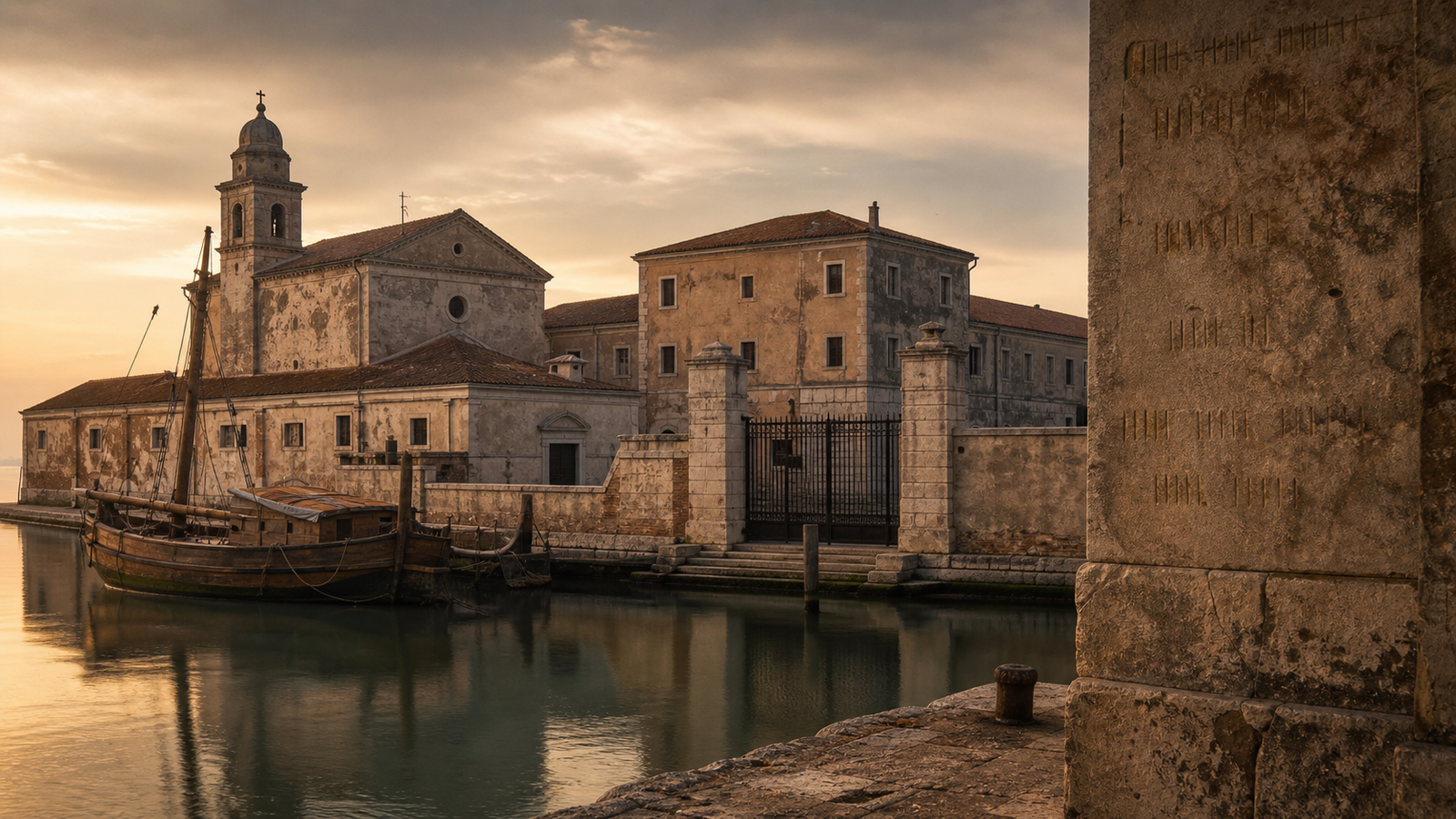
The word quarantine is an Italian-French compound derived from the Romance and Latin languages. As a borrowing, it entered English, Kurdish, Turkish, Persian, Arabic, and most Indo-European languages, where it is used in its original form rather than undergoing derivation. The principal form, quarantena, comes from the Venetian variety of Italian. The practice first arose in fourteenth-century Italy at a hospital on Venice’s island of Santa Maria. In response to plague and cholera, people considered at risk were detained and observed for forty days, both to monitor them and to protect them from contracting disease.
The designation of these forty days also relates to the sacred story of Jesus and a holy feast commemorating Jesus’s forty days of fasting in the wilderness; a religious idea thus underlies and animates it. It is also possible that, because of this sacred association, the forty days were applied to this process as a form of penalty or observation.
Until the sixteenth century, the concept was used to protect merchant ships and the people of these regions from every kind of viral disease. That is, with a French spelling, Italian origin and meaning, and English adoption, it came into use and became an international concept. Yet the Latin root quadraginta, meaning “forty,” itself became the standard international term.
At this level, different language communities, especially Kurdish, have drawn upon derivation and the discovery of different concepts and meanings. This process has two trajectories that differ pragmatically: quarantine and the words Kurdish speakers have sought to coin or recover are not the same.
The principal sense of quarantine is the observation and protection, for forty days, of people at risk of infection, or their protection so that they do not become infected. At this stage, they are examined to determine whether someone has been infected, is becoming infected, or remains at risk, and that person enters this process. Yet in living and phonetic languages of the world such as Kurdish, this stage has no fully precise native meaning that can simply be applied; consequently, the word is used in its original form throughout the world’s living languages. The word coined in Kurdish belongs to a different stage: the process of separation. This is a distinct, specifically physiological stage in which infected people are temporarily separated for treatment and medication from others in quarantine so that they do not contaminate them. It is here that Rudaw’s term varêz, uttered by a doctor and used in an entirely erroneous and illogical manner, was hastily claimed by Rudaw. If considered through contraction and linguistic economy, the word was formed as the blended and derived Kurmanji form varêz from varê and parêz, meaning someone who has been set aside and protected. However, taking the suffix -z is entirely non-lexical, ungrammatical, and unscientific, and the term lacks the capacity to form a compound word.
Another term is hawêr-kirdin, used for separating lambs, young rams, and kids from sheep so that they no longer drink milk; this concept has also been proposed for quarantine. Likewise, pawan has been used with the senses of prohibition, deprivation, and confiscation. If we consider the second process of quarantine, many words are available for this stage, including prevention, observation, protection, confiscation, separation, weaning, restriction, distancing, removal, detention, confinement, imprisonment, segregation, severance, setting aside, deprivation, exclusion, censure, isolation ward, place of exile, health station, health facility, place of cleanliness, place of separation, and place of detention, among many other words capable of representing this process.
Sabir Zhakaw
زارگە · گفتوگۆ
لێدوانەکان٠
٠ لێدوان · ٠ وەڵام
دەسەڵاتەکانی لێدوانەکانت پشکنراون…
هێشتا لێدوان نییە — یەکەم کەس بە کە بۆچوونەکەت بنووسیت.