ğalyān, qalyān, nargile
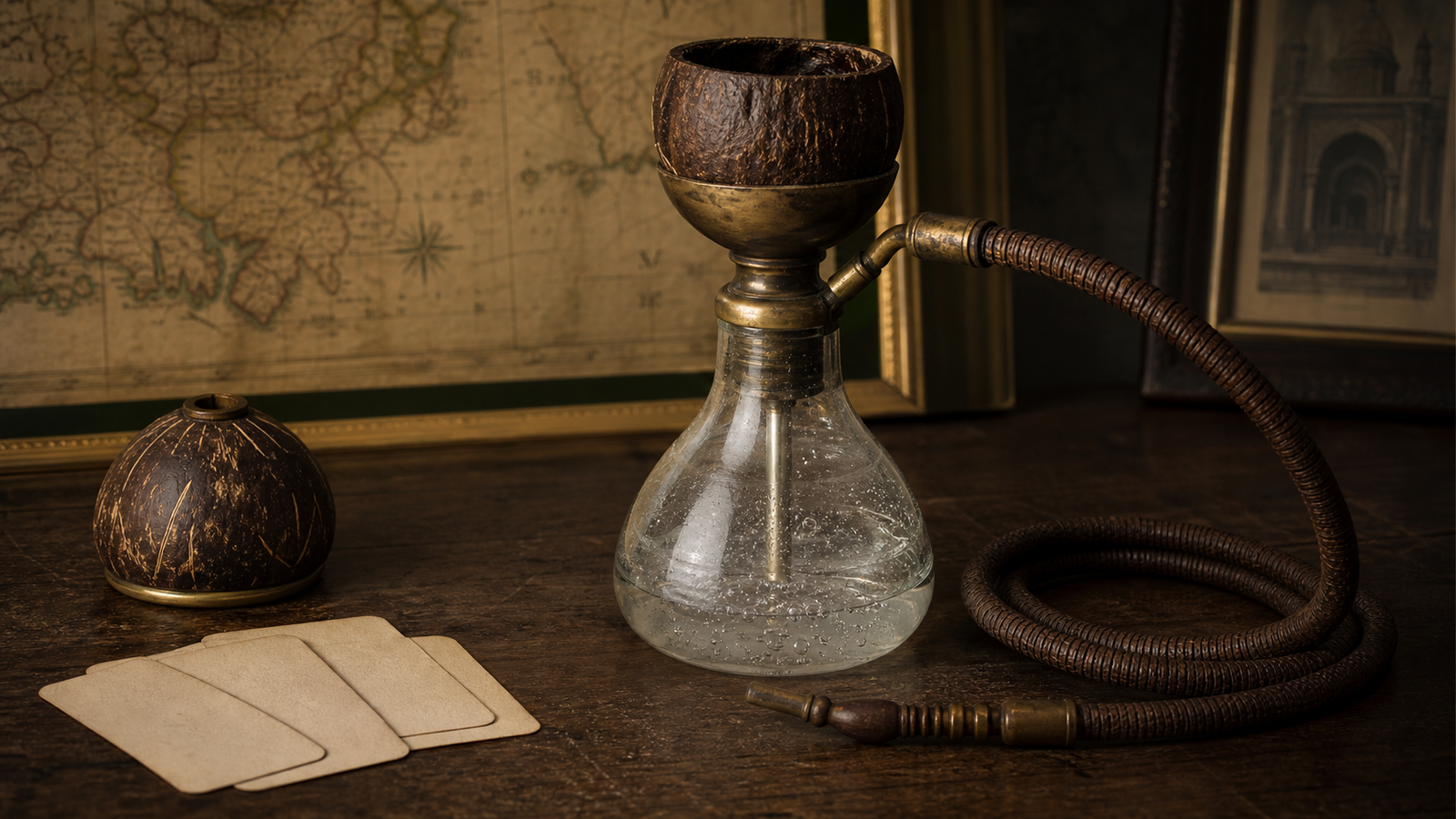
A smoking instrument in which tobacco or fruit-flavoured mixtures are lit and drawn through a water pipe, in a manner comparable to a cigarette. Its history is not entirely clear. The instrument is said to have reached Iran during the reign of the Safavid Shah Abbas by way of Portugal. During the movement of Turks into Iran, it was used in service and hospitality as a way of passing time. The word penetrated languages across the world and became shared among Indo-European, Sanskrit-derived, and Semitic languages.
The word derives from Sanskrit nālikerahá, “coconut,” and entered other languages. In the languages of India and Pakistan, the root /lPA /qqa appears in huqqa. Following British colonisation, it emerged in English as hookha, with the phoneme /q/ changing to /kh/. Graphically, the word in these languages reflects the movement involved in the act: the inhalation and release of smoke in a circular form.
In Turkish, Azerbaijani, and Caucasian languages, the word is traced to the Sanskrit root ghulghul. It entered Arabic in the form /غل/, and the instrument came to be called ghalyān. This refers to the gurgling sound of the instrument, like boiling water. Phonomorphologically, the word derives from the sound of water within the instrument’s glass vessel, represented in Kurdish by qul, kul, qulandin, kulandin. In Persian, the phoneme /gh/ was changed, in an effort to avoid an Arabic form, to the pharyngeal sound /q/, producing qalyān. Colloquial Persian commonly alters words and phonemes, as in daghān–daghun, hayrān–hayrun, vêrān–vêrun, shaytān–shaytun, bārān–bārun; accordingly, qalyān and ghalyān become ghalyun and qalyun. Through phonetic change the word entered Turkish as Qālāyān, Qāla, Qālāmāq, with the meaning “to ignite.” In Dari, Pashto, and Afghan varieties, it retained the form ālā, meaning a water pipe.
Across other languages, French rendered it nargile, from Hebrew, a Semitic language, nārghile; Hebrew in turn took it from Sanskrit nālikerah. Phonomorphologically, the form derives from the shape of the coconut fruit and a small vessel once used for the purpose now served by glass. The shape of the modern glass vessel was likewise taken from this small container. In Semitic, Romance, and Indo-European languages, including those of Arab countries and the Gulf, Germany, Austria, Switzerland, and African countries, it became sheesha or shisha, derived from the same word for “glass.” Languages across the world use these terms.
Arabic: /نارجیلة، نرجیلة، نرکیلة، شیشة/; Persian: /قلیان/; Kurdish: /نیرگەلە، قەنە، قەلیان/; Azerbaijani: /قلیان/; Bulgarian: /ناریجی/; Catalan: /نارگیل/; Czech: /نرگلا/; German: /هوکا، نرگیل، شیشا، کالیان، قالیان/; Greek: /Ναργιλές، نارگیلا/; Spanish: /نرگیل، شیشا/; Finnish: /قلیان، هوکا/; French: /نرگیل، قلیان، غالیون، هوکا، چلیم، قلیان، نارگیلە/; Armenian: /نارینجل، شیشا، هکا، قلیان/; Italian: /قلیان، نرگیلی، هوکا/; Macedonian: /ناریجی/; Norwegian: /قلیان/; Irish: /قلیان، نرگلی، هوکا/; Polish: /هوکا، قلیان، شیشا، نرگیل/; Romanian: /نرگیلە/; Turkish: /نرگیل/; Russian: /شیشا، ناریجی، ناریگیلا/; Slovak: /کالیان، قلیان، نرگیل/. In Afghanistan and Uzbekistan, /چیلیم، چلم/ is used with the same meaning of “pipe.”
Sabir Zhakaw
زارگە · گفتوگۆ
لێدوانەکان٠
٠ لێدوان · ٠ وەڵام
دەسەڵاتەکانی لێدوانەکانت پشکنراون…
هێشتا لێدوان نییە — یەکەم کەس بە کە بۆچوونەکەت بنووسیت.