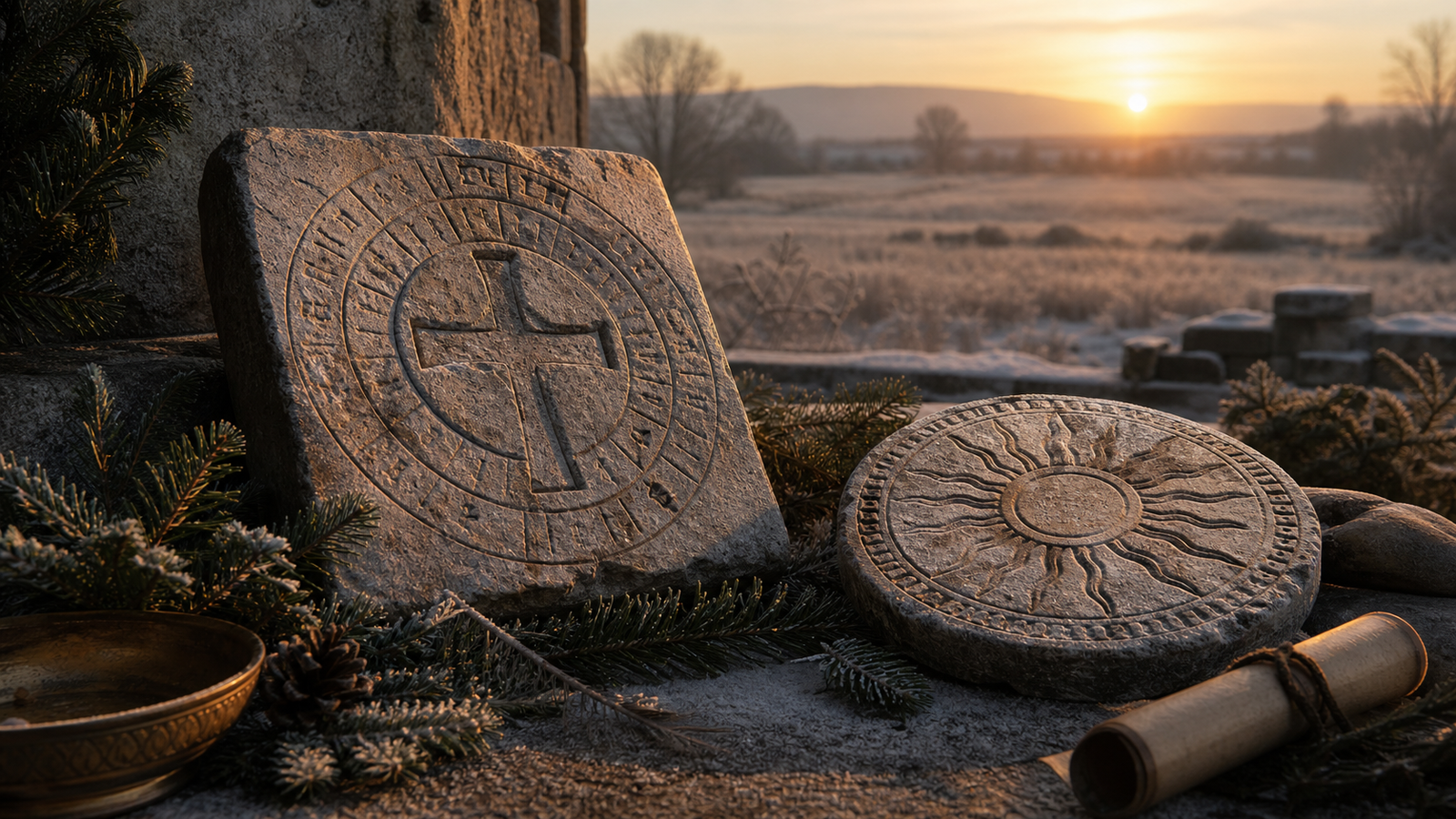
Christmas is a festival commemorated and held sacred in the Christian faith, marking the birth of Jesus. Members of the Roman Catholic Church and followers of Protestantism observe the occasion on the night spanning 24–25 December, treating the day as a renewal at the turn of the year. Orthodox churches throughout the world designate the twenty-fifth as the day of Jesus’s birth, and the occasion continues to be celebrated.
The word Christmas, meaning the feast of Christ, entered English and other world languages from christes maesse. The form Xmas was first used in the thirteenth century. The older word Yule derives from Germanic jōl and Anglo-Saxon geōl, meaning a national winter festival.
Related forms in other languages include Spanish Navidad, Italian Natale, and French Noël, all referring to a celebration of birth and used for this occasion. The German word Weihnachten means “holy night.”
Many scholars around the world trace the day to the “birthday of the unconquered sun,” or Sol Invictus, described here as an Italian and Greek expression. The same phrase signifies the renewal of the sun and the recession of winter with the anticipated return of spring and summer. The occasion was widespread in the ancient Roman Empire, although Christians now claim it as their own.
In the Mithraic or Mitra religion, described as an ancient religion of the Kurds, the lengthening of the day and the end of cold, ice, frost, and freezing were likewise celebrated in a festival representing the rising and re-emergence of the sun.
On this occasion, I extend my congratulations to all living beings on Earth and wish them a happy new year.
Sabir Zhakaw
زارگە · گفتوگۆ
لێدوانەکان٠
٠ لێدوان · ٠ وەڵام
دەسەڵاتەکانی لێدوانەکانت پشکنراون…
هێشتا لێدوان نییە — یەکەم کەس بە کە بۆچوونەکەت بنووسیت.